
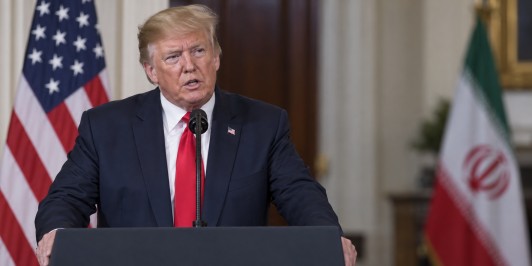
The ongoing tensions between the United States and Iran continue to cast uncertainty over regional stability and energy security, especially concerning the vital shipping lanes through the Strait of Hormuz. US President Donald Trump’s recent address to the United Nations General Assembly underscored this, as he emphasized Washington’s readiness to intensify military action against Iran if necessary.
Speaking in New York, President Trump reiterated his administration’s firm stance against Iran’s nuclear ambitions, asserting that the US would not permit Tehran to develop a nuclear weapon. He indicated the possibility of reaching a diplomatic agreement with Iran post the US midterm elections in November, suggesting a potential shift in policy depending on the election outcomes.
Trump’s speech also included a call for international support in imposing economic sanctions on Iran, aiming to pressure Tehran into negotiations. This appeal comes amid ongoing disruptions to global shipping routes caused by the conflict in the region, affecting energy supplies and raising concerns among global powers.
In a broader context, Trump criticized the International Criminal Court, urging member states to withdraw from it, and declared that the US would resist any international legal actions involving its military forces. His remarks reflect a continuing US policy of skepticism towards multilateral institutions perceived as compromising national sovereignty or military interests.
Additionally, Trump touched on Middle Eastern issues beyond Iran, highlighting efforts towards achieving a ceasefire and reconstruction in Gaza. These discussions form part of a larger dialogue at the UN, addressing the persistent conflicts and humanitarian crises affecting the Middle East and other parts of the world.