
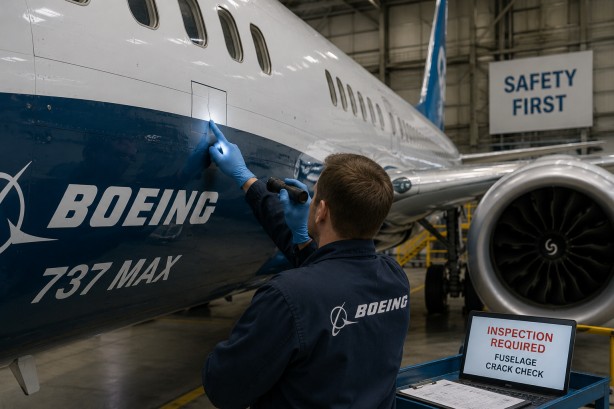
In a recent directive, U.S. aviation regulators have mandated that operators of Boeing 737 Max aircraft conduct inspections for potential cracks in a critical fuselage component. These inspections, set to begin in September, will encompass approximately 471 aircraft. The focus is on the “bear strap,” a structural element that reinforces the fuselage around exit doors. This move comes after similar issues were identified in older Boeing 737 Next Generation models, which led to previous inspections.
Despite the absence of reported cracks in the 737 Max fleet to date, authorities have highlighted the aircraft’s comparable design and manufacturing methods. These similarities suggest the potential for the same issue to arise. The regulators emphasized that overlooking such cracks could compromise a primary structural component, thereby affecting the overall integrity of the aircraft.
Boeing has acknowledged the situation, stating that it has collaborated with airlines on this issue since its identification in 2019. The company endorses the mandatory inspections, which are intended to detect and address any emerging problems before they escalate into critical safety concerns.
This development adds another layer of scrutiny to the 737 Max, which has faced extensive examination following past safety incidents and ongoing concerns regarding its manufacturing and engineering standards. The aircraft model was globally grounded after two tragic crashes in 2018 and 2019, heightening awareness and regulatory oversight on its operations.