
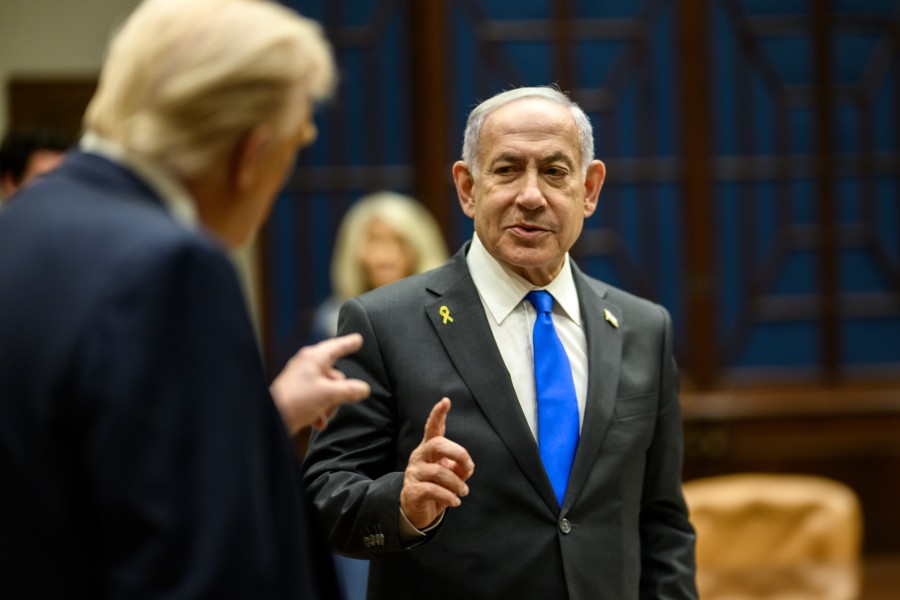
Israeli Prime Minister Benjamin Netanyahu has emphasized the need for Israel to reduce its military reliance on the United States and increase its own weapons production capabilities. Speaking to reserve combat officers in the Gush Etzion settlement bloc, Netanyahu acknowledged the longstanding support from America but underscored the importance of establishing a defense manufacturing system within Israel to ensure long-term security and self-sufficiency.
Netanyahu’s remarks coincide with ongoing discussions between Washington and Jerusalem about a new 10-year security cooperation framework. This framework aims to shift the relationship from one heavily focused on military aid to a more balanced partnership. The prime minister highlighted Israel’s continuous confrontation with Iran and its affiliated groups, stating that the nation’s future security hinges on enhancing military strength, technological advancements, and leadership development.
The comments from Netanyahu reflect growing concerns in Israel over being marginalized in recent diplomatic talks between the United States and Iran. Israel was not part of the negotiations of a recent memorandum of understanding between Washington and Tehran, which seeks to resolve hostilities and curb the potential for renewed conflict. The agreement affects several regional issues, including the situation in Lebanon, where Israeli forces remain active against Hezbollah. Iran has called for an Israeli withdrawal from Lebanese territory, but Israel insists that it will not vacate until security threats are eliminated.
The situation underscores tensions regarding the degree of US influence on Israeli military decisions. Recently, US President Donald Trump suggested that Washington holds significant sway over Israel’s actions in the region due to their close alliance. Some Israeli officials have criticized the US-Iran understanding, arguing that critical objectives, such as dismantling Iran’s nuclear and ballistic missile capabilities, have not been fully addressed. The United States, however, maintains its commitment to preventing Iran from acquiring nuclear weapons, leaving open the possibility of renewed action if necessary negotiations fail.
US Vice President JD Vance has defended the agreement, highlighting the substantial military assistance the United States has provided to Israel. Vance emphasized the importance of sustaining the strategic partnership between the two nations, despite the concerns raised by some Israeli officials regarding the evolving dynamics of their regional security challenges.